Lessons from Buried Bones
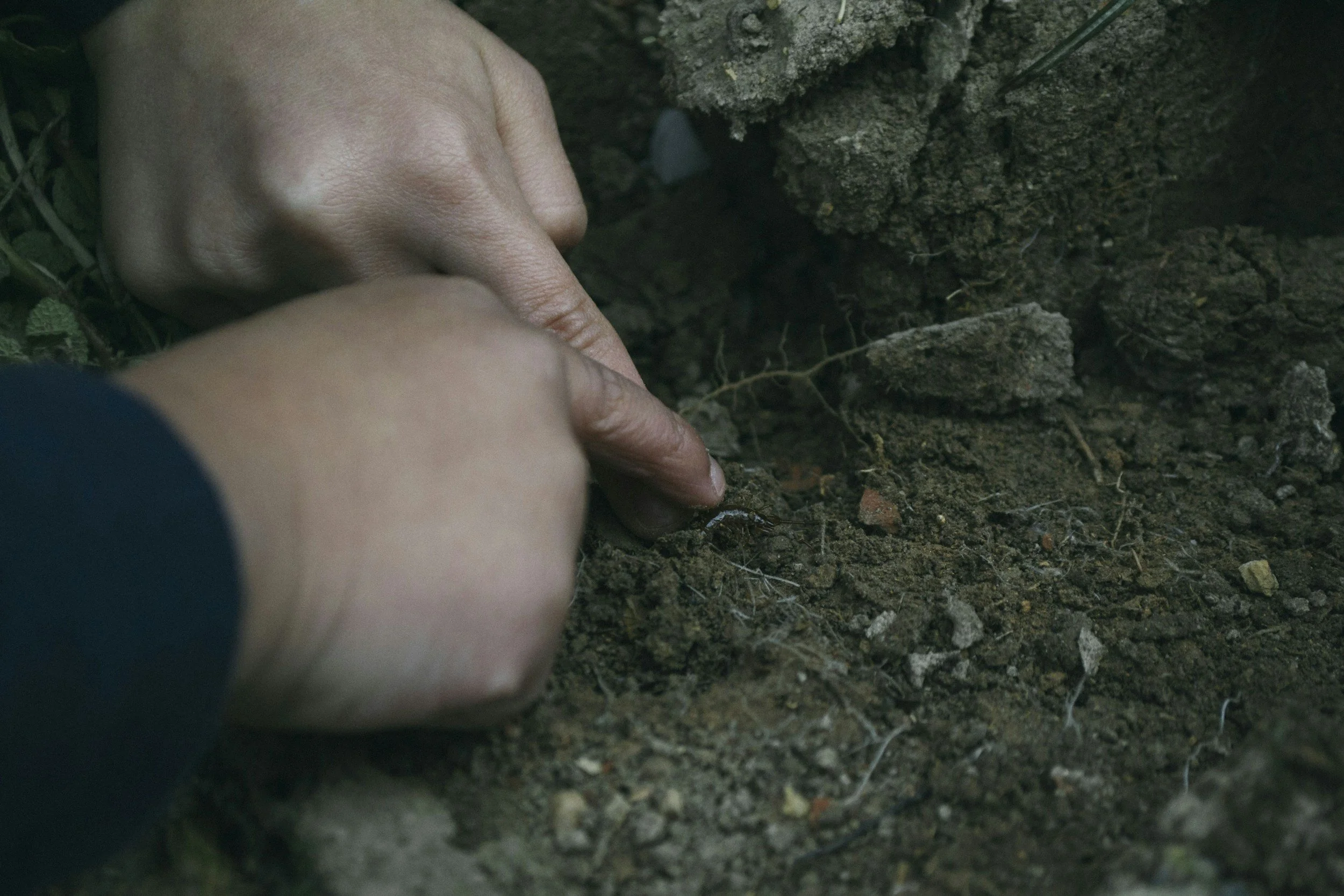
For the past seven days, I have been home. We didn’t take a traditional American spring break vacation, but rather a “tend to the soil” spring break. Both kids were asked to haul dirt around the house as Scott and I tilled and tended the soil for future planting. The work was often more play for them, as they discovered many mysteries beneath the surface.
Over the week we also decided to challenge the kids with a nearly-no-screens rule. The rule was that we all had to watch together as family time, and one morning, while I drank my coffee in PJs, we decided to look for a documentary. When we stumbled upon The Secrets of the Neanderthals on Netflix, I instantly hit play. Not only did it reflect our own excavation process outside, it also serendipitously aligned with a recent book I had just finished. This book, written by a forensic anthropologist (which, if you take my classes, you know is my new professional bible), poetically shares the stories our bones tell after we die. It is full of anatomical insights I couldn’t agree with more, as well as ethical and moral reflections on the process of living and dying with one another.
Bones stay in the soil for centuries, carrying every secret inscribed on their surfaces, in their deformations, and in their positioning within the earth. After we are gone, they are the one thing that remains, buried until someone, or something, comes and digs them up.
The Secrets of the Neanderthals shared how anthropologists discovered the sex, ages, and injuries of ten Neanderthals. All of this information provides insight into their ways of being and their ways of survival. If, like me, this is a reawakening of their existence on this planet, a helpful perspective is that Neanderthals survived on Earth longer dating back to 500,000 years ago until their “disappearance,” which was most likely due to severe environmental changes. These non-Homo sapiens were originally thought to be simple and animalistic, void of emotion or language. However, in the Shanidar Cave, located in Iraqi Kurdistan, ten Neanderthals have been discovered that tell a very different story.
So why do Neanderthals pique my interest or even relate to Pilates and yoga here at The Practice Space?
There were two specific bodies discovered in the Shanidar Cave that paused my breath in silent reflection. First, the discovery of Shanidar 4, a woman who appeared to be buried with flowers, as there is pollen residue on her bones. Some theorists believe this was a ritual burial for someone loved, someone who was cared for and honored in her passing. Further, Shanidar 1, a male with significant injuries and signs of aging, implies a community of support for his survival. He most likely wasn’t able to hunt and support the rest of his group in return which means others took the weight of his needs onto their shoulders for his survival.
They were not cannibals or void of care. They were loving and kind to one another while trying to survive a world that was much harsher than how we live today. Some believe that cannibalistic theories of the Neanderthals were actually similar to postmodern spiritual practices. Eating the flesh was a possible way to carry their loved ones with them into their own bodies. Today we have similar practices like when women consume their own placenta after birth for its spiritual implications and nourishing properties. This may seem gross to some, but aside from the flesh and the ickiness… it’s a powerful message of care.
Neanderthals, tens of thousands of years ago, cared for each other. I’ll repeat that because it is worth repeating…
They cared for each other.
They survived hundreds of thousands of years because they protected and loved one another. It wasn’t because they were told to by social media; it was because they knew it was the only way. It is inscribed into our flesh and our genetic code to be in community. To be together.
Just before watching this documentary, I woke up mid-week after watching some social media “fitness” videos, and I thought to myself do we really need to do this every day at the studio? Why do we take the harder path of holding a large commercial space for a community when people have access to arguably the same information at home on their screens? And when I learned about the Neanderthals I found that the answer is simple…
Because being together is a basic human need.
Like food and water,
Connection is essential to our survival.
To learn together in a room,
To be supportive of one another,
To protect and advocate for one another,
To march together.
This is an essential public practice. Moving is the number one recommended “treatment” for nearly every disease or dysfunction in the human body. Meditation and breath are two of the most consistently effective practices for those struggling with mental health and anxiety. But doing it together is where the soul heals and strengthens. Being next to someone on their mat so you can hear them breathe, make eye contact and a grin at them when the teacher makes a joke, and chat before or after class about the weather or possibly about the bigger issues happening in this world today - matters.
I’ll let this blog post rest here as there will be a part two to this meandering on community, ritual, and practice. These concepts were too rich for me to stop with this piece of writing. But for now, I’ll leave you with this message..
The secret is in your dedicated practice together.