An Interpersonal Practice
Over the weekend, I was listening to the Curiosity Shop podcast conversation between Brené Brown and Adam Grant. In the middle of their discussion, Brené Brown stated that she never really understood the difference between responsibility and accountability. Adam Grant provided concise differentiating definitions for the two terms offering clarity for her and the listeners. His explanation sent me into a spiral of personal and professional reflections. He said:
“Accountability is interpersonal, whereas responsibility is personal.” In other words, accountability is how we help hold each other to a shared standard or expectation, while responsibility is how we hold ourselves to a standard or expectation.
With this simple distinction, I realized that I have always had a deeply interpersonal relationship to discipline and movement practice. I grew up dancing within a company. I showed up not just for myself, but for the studio, the rehearsal, and the fellow performers. There was a collective rhythm to the work. In contrast, my husband grew up in the culture of physical training at a gym. He shows up on his own. Independently. Self-driven. His relationship to movement is rooted much more in personal responsibility.
This also translates into how differently we approach ordinary tasks and routines. I love having people beside me because their presence helps me stay accountable. He genuinely enjoys doing things alone, maybe because it connects to his sense of responsibility. In an interesting parallel, we both deeply appreciate when another person shows up in the way that comes most naturally to us. For example, when my husband does things with me and we hold each other to a shared accountability, I feel full and content. Whereas he loves when I follow through on things independently. To be honest, I used to judge how we interacted with standards and expectations. I saw it as a flaw because he couldn’t do it in the community. But after this one moment of language clarity, I realized that his approach is equally as important as mine. In fact, if we both practiced a little bit of each, we would probably be more effective and emotionally resilient..
The next level of my meandering thoughts was the connection to our upcoming shared membership summer campaign. Our studio gets a little quieter during the summer months so two years ago we started doing shared memberships. Students can add a partner, friend, or coworker to their account as a shared membership at no additional charge. It was our way to keep the energy up in the studio during these beautiful days when portlanders tend to favor floating on the river. This summer offerings lends itself well to the idea of accountability as a path towards dedication.
For many years, our studio has shared the belief that self-practice connects to the greater world by helping us build responsibility within ourselves so we can more thoughtfully show up for other people and our environment. We have openly spoken about individual practice as a pathway toward social justice. With that said, I want to begin a conversation about the next act of dedication: taking that personal responsibility and extending it toward our peers through systems of accountability, care, and community support.
There is a bidirectional relationship between the two, the way inner responsibility impacts accountability, and accountability, in turn, strengthens responsibility. So this summer, or randomly in your own practice, you could try flipping the script from doing things alone and eventually impacting others to intentionally impacting others as a path to heal within. Cultivating interpersonal support may be a linchpin to achieving the mission of being physically autonomous and emotionally resilient.
The truth is, the studio’s mission is deeply interpersonal and woven into everyday life. Consciously or unconsciously, we influence one another’s sense of physical autonomy and emotional resilience. It is common to hear encouragement about protecting our own autonomy in a world that may attempt to control or shape us. But I believe it is equally important to recognize how we are accountable to support others in remaining agents of their own bodies, experiences, and choices. When we actively create environments that preserve agency, dignity, and self-trust for others, those same qualities slowly begin to return to us collectively.
Now onto my final wandering thought. As this reflection unfolded, I began wondering if our studio tagline still fully captures this conversation. For years it has been, “The secret is in YOUR dedicated practice.” But perhaps the secret is also in OUR dedicated practice. The longer I sat with that idea, the more I realized the truth is probably both. Personal dedication matters, but so does the way we practice in relationship to one another. Maybe the tagline itself is evolving into:
“The secret is in (y)our dedicated practice.”
For those who have been around for a while, don’t worry, I’m not changing everything overnight. But I am becoming more aware that there is something deeply important about responsibility. About learning how to show up for yourself without always needing another person to pull you forward. I know this is something I could continue strengthening within myself as well.
At the same time, there is something profoundly human about accountability and belonging. We are not meant to exist entirely alone. Sometimes we show up because someone else is expecting us. Because a teacher noticed when we were gone. Because a friend saved us a spot in class. Because our community is practicing beside us. And maybe that kind of interconnected support is not separate from dedicated practice, but part of it.
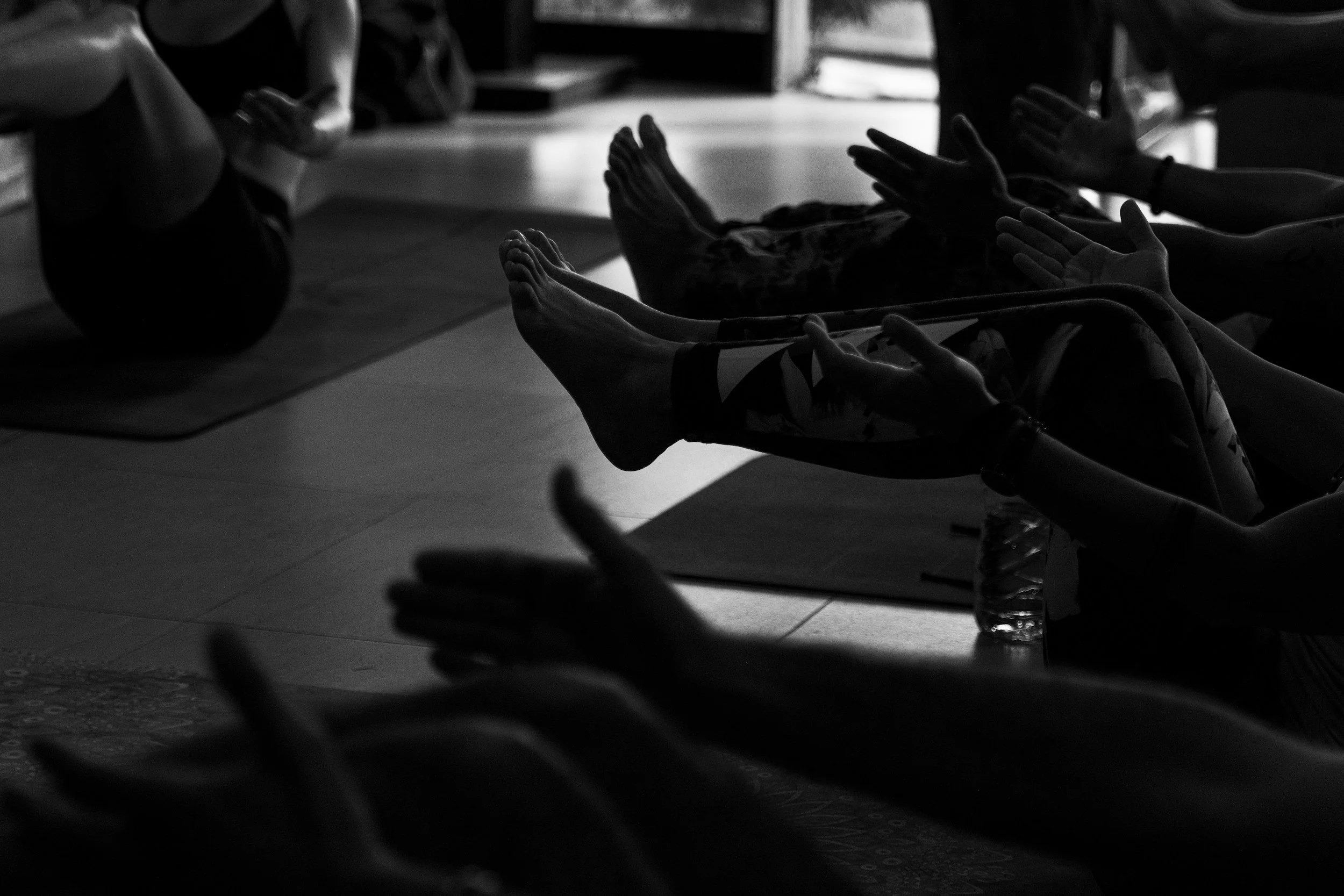
What I love about yoga and Pilates practiced within a formal studio setting is that they hold both realities at once. We practice individually on our mats, inside our own bodies, listening to our own thoughts, sensations, and experiences. And yet, we do it together, in shared space, within a community.
Part of growth comes through personal responsibility: learning to show up for ourselves with honesty and dedication. But meaningful change also requires collective accountability: the ways we support, influence, and care for one another. One without the other feels incomplete.
Happy summering everyone.